The simplicity of a warm flat roof makes it one of the most popular designs providing an effective and easy way of insulating a building.
Inverted warm deck roof advantages.
It is also protected from damage by traffic on the roof such as people walking the movement of equipment and so on.
We would like to show you a description here but the site won t allow us.
No vapour control layer is required.
Rigid extruded polystyrene insulation has minimal water absorption due to its closed cell structure.
Warm flat roofs create little or no thermal bridging.
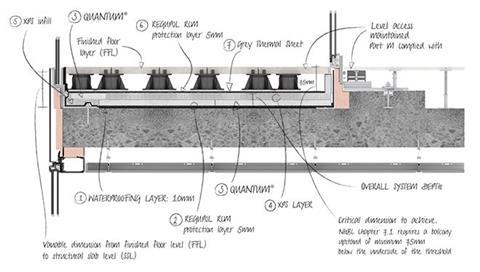
In an inverted roof construction the principal thermal insulation layer is located not only above the roof structure but also above the waterproofing resulting in the waterproofing structural deck and support structure being at a temperature close to that of the interior of the building.
Warm flat roofs make it easier to eliminate cold bridging.
Benefits of inverted roofs the great benefit of inverted roofs is that the insulation protects the membrane from extremes of weather such as frost uv exposure and the expansion and contraction that comes about from summer winter temperature cycles which can be as much as 80 c on some roofs.
A warm roof is breathable allowing moisture out.
Allows heat to be conserved with no requirement for roof void ventilation.
An inverted roof is quite simply where the waterproofing layer is installed over the structural deck rather than over the insulation.
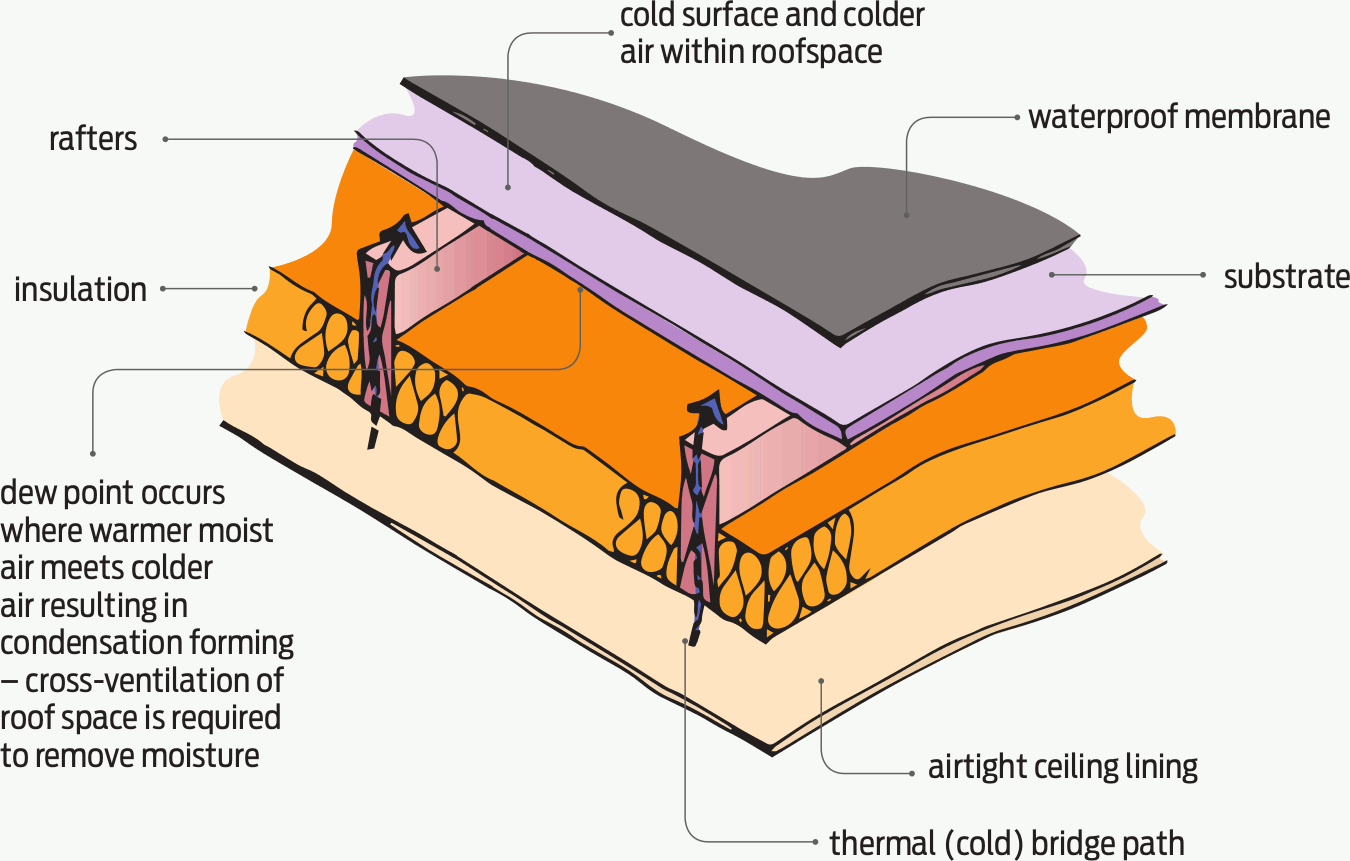
This roof construction called a cold roof does have some disadvantages.
Also known as a protected membrane or upside down roof inverted roofs employ insulation which can resist water absorption provide excellent thermal performance be unaffected by freeze and thaw cycles withstand surface traffic and be protected from uv and mechanical damage among others.
Inverted roofs are able to exceed building regulations part l requirements and have many advantages.
One of the main benefits of the inverted roof method is that the membrane is protected by the insulation from the expansion and contraction caused by weather fluctuations such as frost and solar radiation.
This ensures there is no unnecessary heat loss through joints or fixings.
A breathable roof ensures there is no moisture build up which can lead to fungal or mould growth.
The traditional method of constructing a low slope membrane roof is to install insulation between the rafters leaving an air space between the insulation and the roof deck above see figure 1.