A wood deck roof system.
Insulating underside of roof deck.
For the same reason insulation shouldn t touch the roof s underside.
Polyurethane spray foam metal roof insulation in order to add moisture barrier under metal roof you can spray the undersides of the roof by using a thick layer of polyurethane spray foam.
Remove existing roofing and non adhered underlayment to expose roof sheathing.
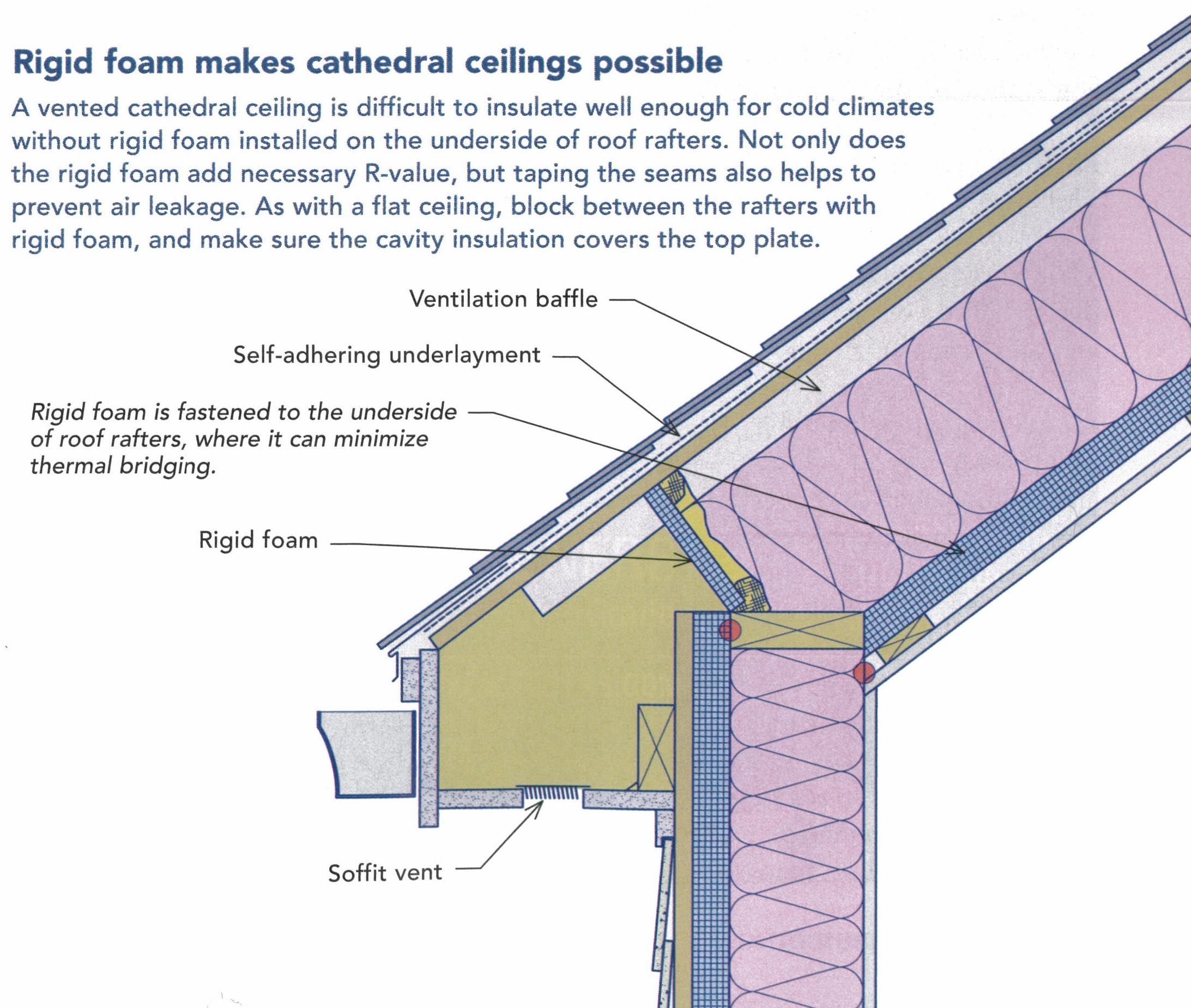
Fiberglass insulation is installed between the rafters as shown schematically below.
You can then install.
Low slope and steep slope unvented roof systems i e.
Staple plastic or foam baffles to the roof sheathing near the eaves to keep the material away.
Insulation and air barrier are applied directly to the underside of the roof deck are common in applications where designers are seeking cost effective and energy efficient roof assemblies.
Install insulating sheathing above the roof deck on existing homes.
Insulating the underside of deck.
It is about three feet off the ground and has mesh stapled to the underside to prevent bugs from making their way in.
If you re insulating from scratch put the right vapor barrier in the right place.
For some building uses the ceiling might be absent.
It will help you to eliminate problems that may come when the house becomes extremely cold in the winter and terribly hot in the summer.
In addition to installing the foam board on the underside of the roof deck you can attach it to the bottom edges of the rafters in the same manner you would hang drywall.
Most unvented attics incorporate spray polyurethane foam spf on the underside of the roof deck and attic walls.
This retrofit assembly is appropriate for homes with conditioned attics or where the retrofit is intended to create a conditioned attic.
However architects of these compact roof assemblies must consider vapor permeance and arrangement of the materials to produce acceptable hygrothermal performance and low risk of condensation in the resulting conditioned attic space.